Five kinds of price: fixed, from, a range, an hourly rate, or ask us
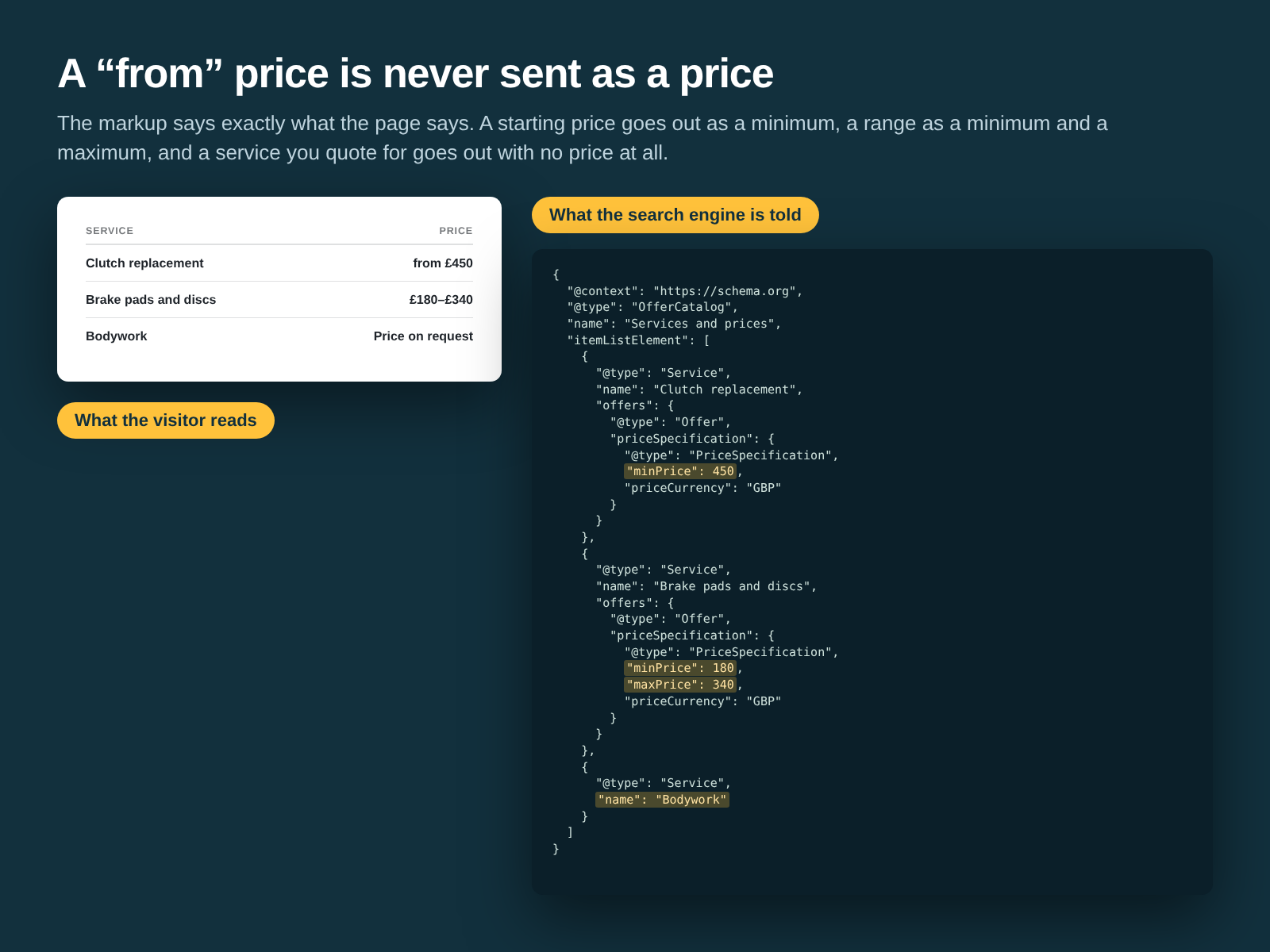
A "from" price goes to Google as a minimum, never as the price
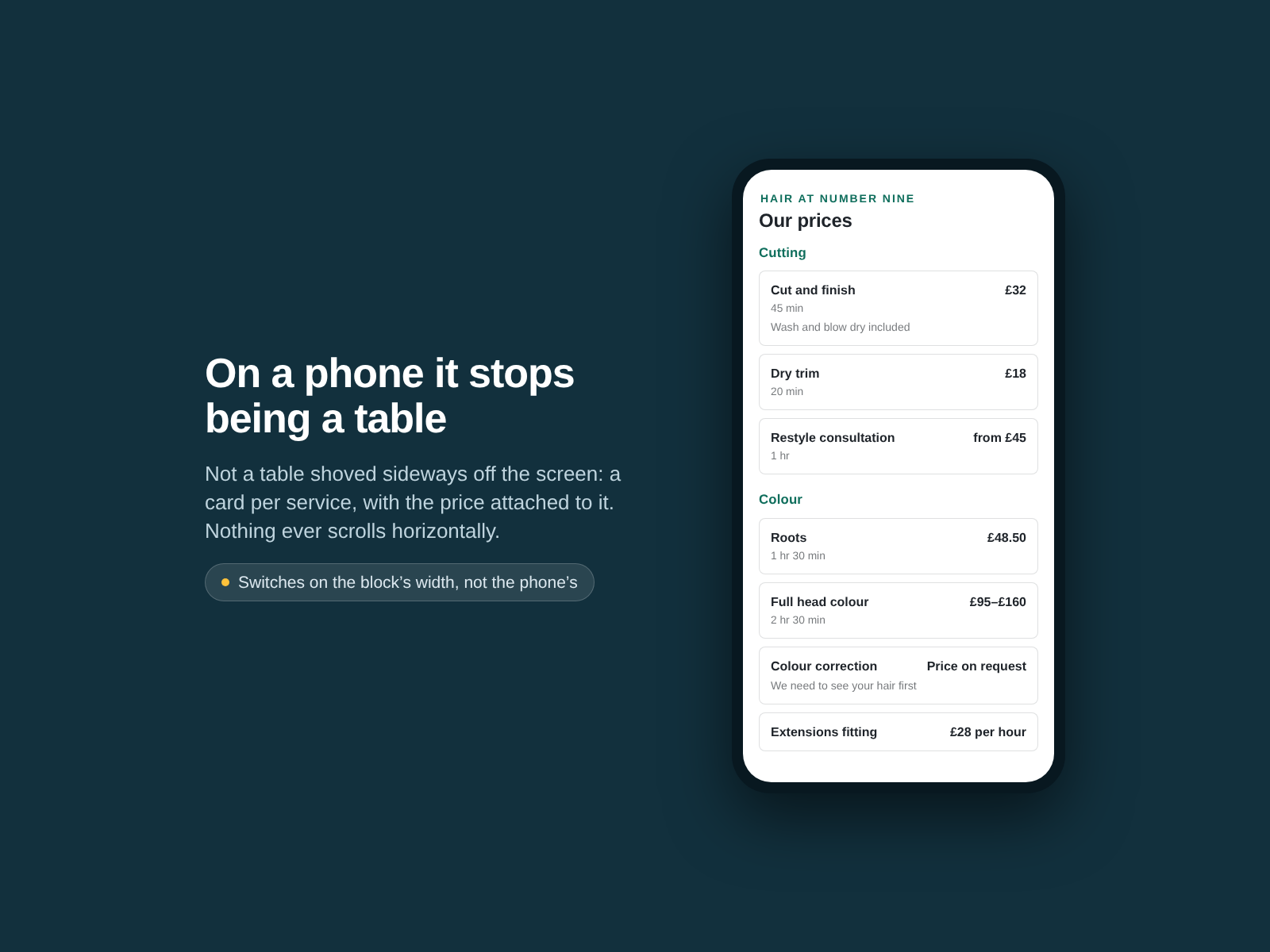
A real table on a desktop, real cards on a phone — never shoved sideways
Free, in twelve languages, with nothing held back and no upgrade prompt
Most price lists on a small business site are a picture, a PDF or a grid of boxes that falls apart on a phone. This one behaves like a price list — for any service business whose visitors would rather read the prices than ring a competitor.
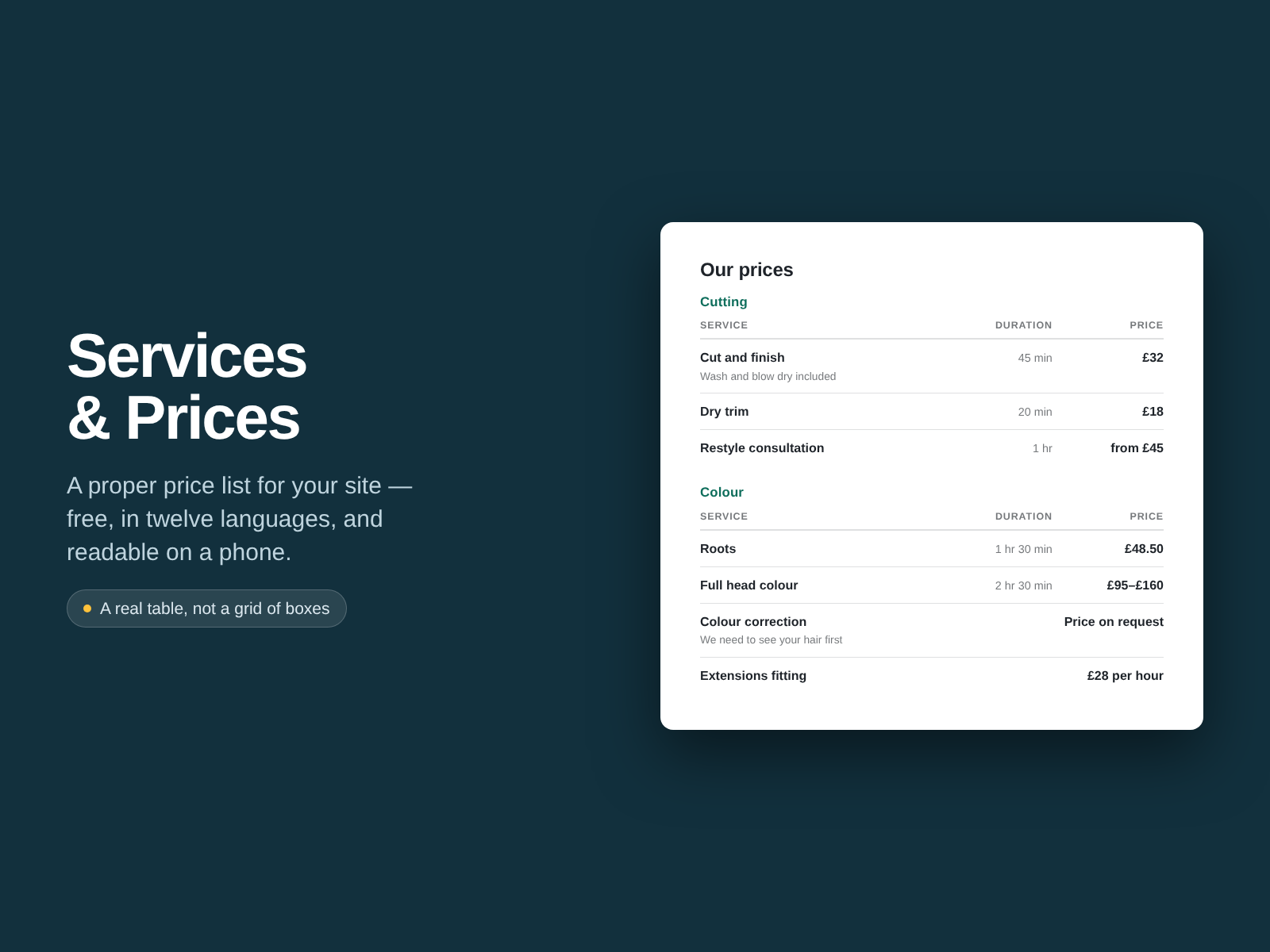
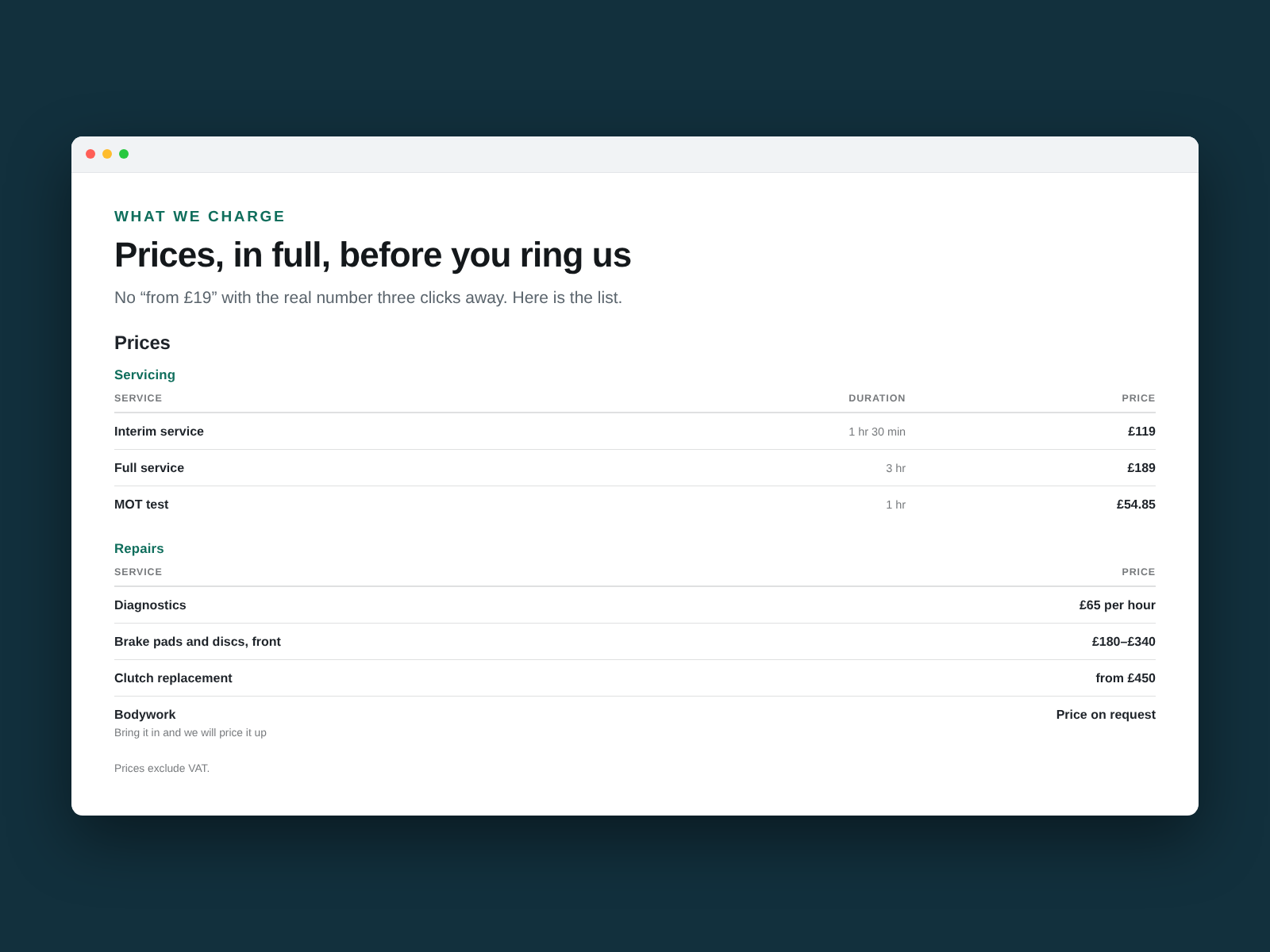
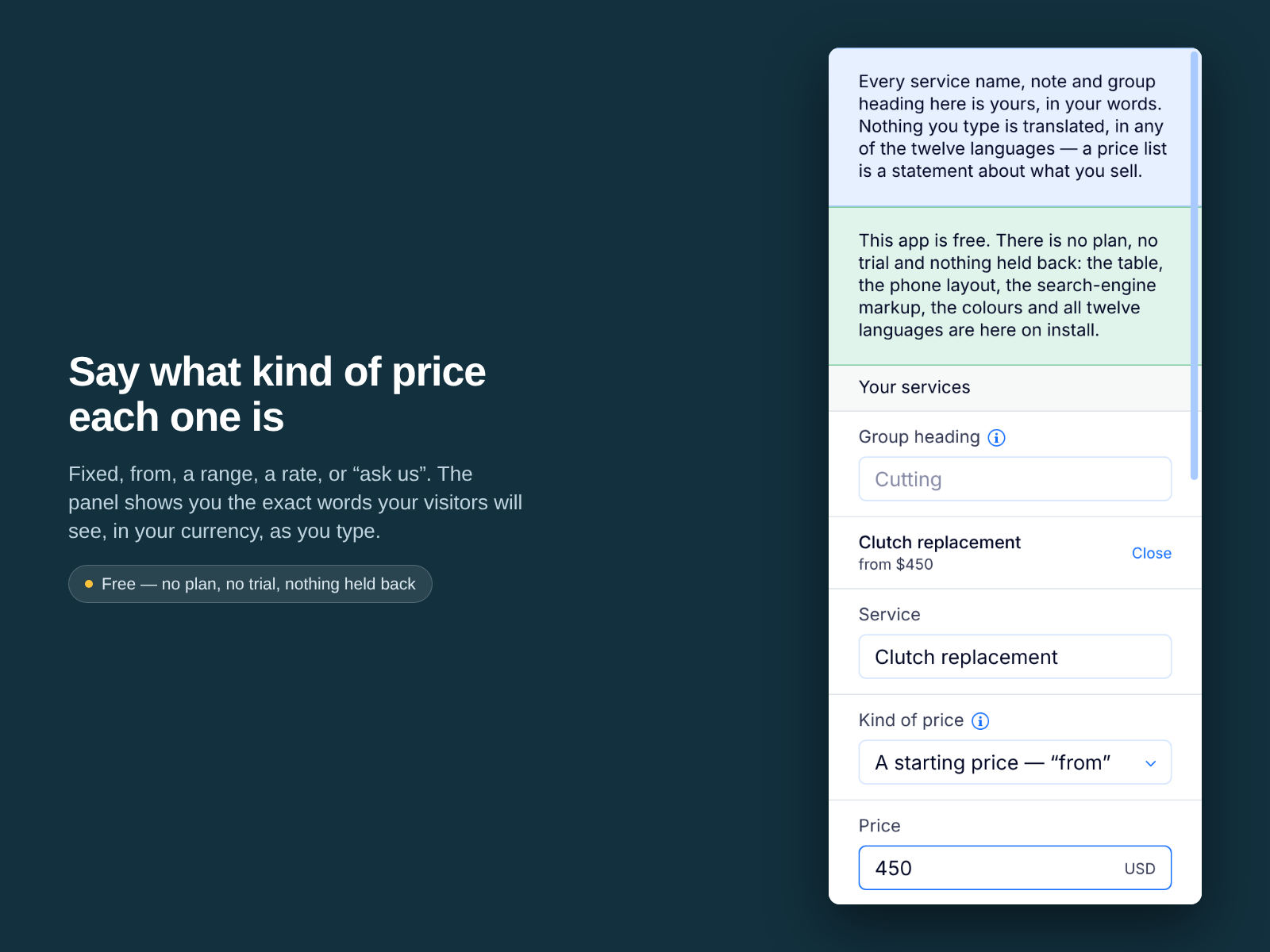
Say what kind of price each one is. A cut is £32. A restyle starts at £45. A correction is £95 to £160. Extensions are £28 an hour. Bridal work you see first. Five statements, one setting each, each a sentence in the visitor's language.
Turn on structured data and a starting price goes out as a minimum, a range as a minimum and a maximum, a service you quote for with no price. Markup that claims a price the page does not show gets a site demoted.
A real table on a desktop: caption, column and row headers. A card per service on a narrow block, every price labelled. Nothing scrolls sideways. Your currency, the visitor's number conventions, twelve languages, and free.
What it does not do: it is not a booking system — no calendar, no deposit, no checkout. It does not read your Bookings or Stores prices; the list is typed in the panel and is yours. It is not a restaurant menu. Correct markup never guarantees a rich result; Google decides.